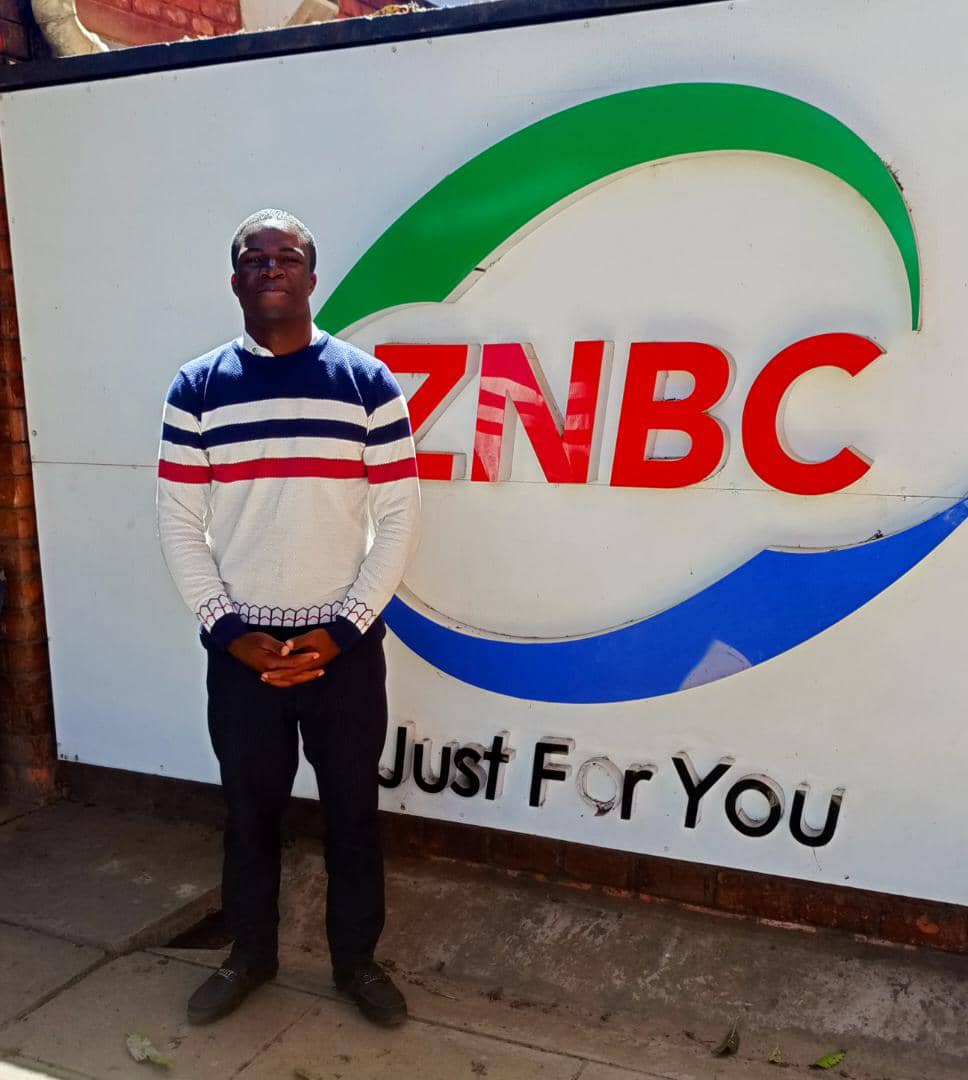
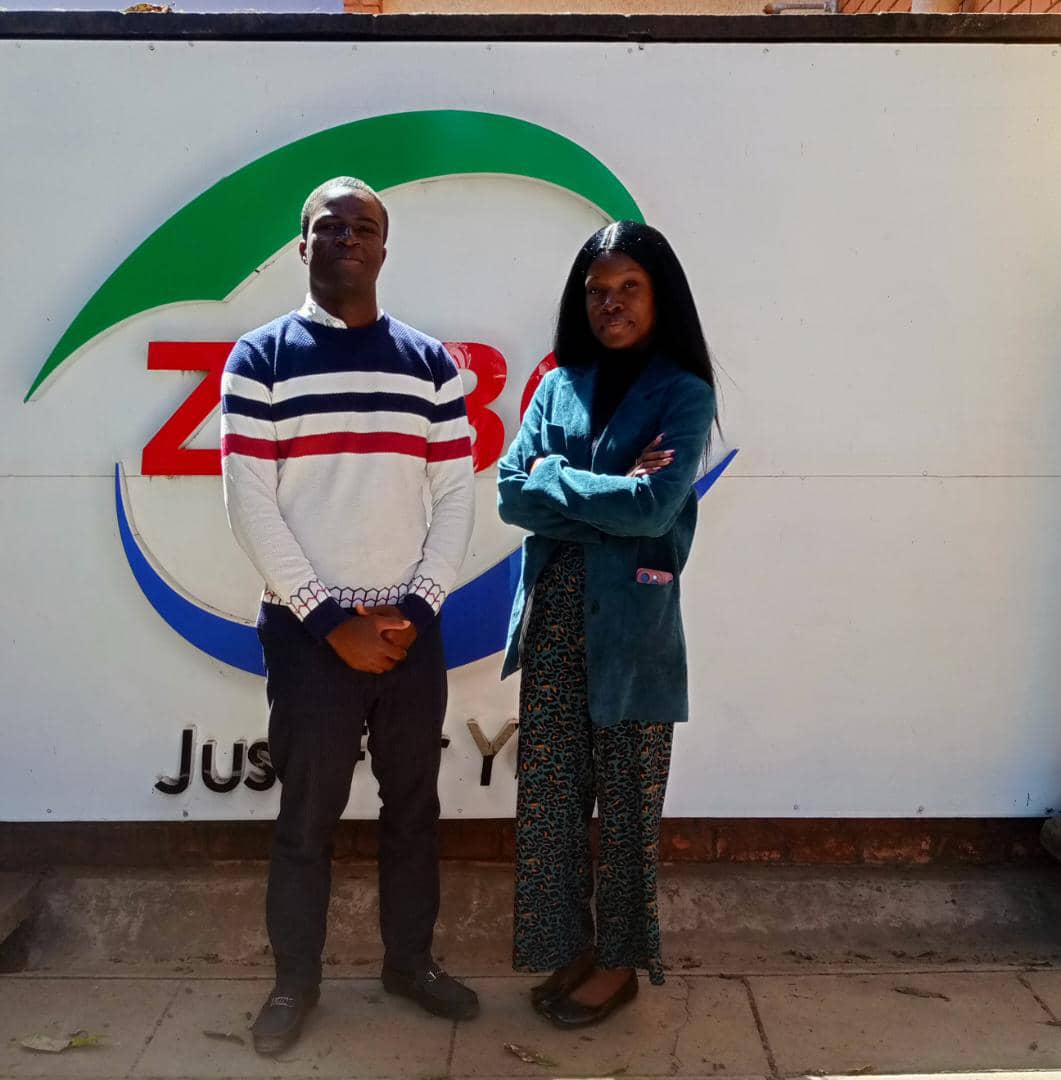
ZNBC Community Check | Radio 2 | 19 August 2026 Featured Guest: Dalitsani Banda Interview conducted by: Martha Ngoma
Overview
On 19 August 2026, I had the privilege of being featured on ZNBC's Community Check, recorded at Radio 2, in a conversation with Martha Ngoma on issues surrounding young people, education, leadership, entrepreneurship and Zambia's broader development.
The conversation provided an opportunity to speak not only about what I am building, but also about why I am building it and the wider issues that continue to shape the lives and aspirations of young people.
Representing THE FORGE, I shared perspectives drawn from my direct engagement with young people in schools, campuses and communities, while highlighting the importance of creating stronger pathways between education, industry, enterprise and opportunity.
The conversation was guided by a central belief:
Young people have enormous potential. Our responsibility is to create the pathways, platforms and ecosystems that allow that potential to become productive.
1. Why I Do This Work
The conversation began by exploring who I am, what I am building and what led me to this work.
My focus on young people, education, leadership and entrepreneurship has been shaped by observing the realities young people face and recognising the gap that often exists between what they are capable of becoming and what they are able to access.
I have encountered young people with ambition, creativity, ideas and a desire to contribute, but who may lack access to mentorship, information, networks, exposure and practical opportunities.
That experience has influenced the kind of work I want to build.
For me, youth development cannot simply be about telling young people to dream.
It must also be about helping create the conditions in which those dreams can be pursued.
2. The Challenge: Turning Potential into Opportunity
One of the central issues discussed was the challenge many young people face in translating their potential into meaningful opportunities.
Young people are often told that they are the future. But potential does not automatically become impact.
There must be pathways.
There must be access.
There must be exposure.
There must be people willing to open doors, share knowledge and create platforms.
Through my engagement with young people, I have increasingly come to understand that the issue is not necessarily a lack of ambition.
In many cases, the ambition is already there.
What is missing is the ecosystem around it.
That is why the conversation around youth development must go beyond motivation and begin addressing the structures, relationships and opportunities that allow young people to progress.
3. Education Must Connect with Industry
One of the strongest themes from the interview was the relationship between education and industry.
This is a conversation I believe we can never emphasise enough.
Education remains fundamental. It gives young people knowledge, develops their thinking and provides an important foundation for their future.
But we must also ensure that what happens within our schools, colleges and universities connects meaningfully with what happens beyond them.
Young people need opportunities to encounter the world of work, enterprise and industry before they graduate, not only afterwards.
They should have access to:
Industry exposure
Mentorship
Career guidance
Practical experiences
Entrepreneurial knowledge
Professional networks
Real-world problem-solving
We need stronger bridges between the classroom and the economy.
Education should not exist in isolation from the world it is preparing young people to enter.
4. Beyond Youth Unemployment
The conversation also examined the transition from education into employment and enterprise.
Youth unemployment is an important challenge, but I believe we need to look deeper than the unemployment figure itself.
We need to ask whether young people are being adequately prepared to participate in the economy in different ways.
That includes employment, entrepreneurship, professional careers, innovation, skilled work and other forms of value creation.
Entrepreneurship also needs to be approached seriously.
It is not enough to tell young people to "start businesses."
We need to equip them to understand problems, markets, customers, value creation, sustainability and execution.
At the same time, we must recognise that not every young person needs to become an entrepreneur.
What matters is creating a generation that is capable, adaptable, productive and prepared to contribute.
5. The Role of Parents in Career Choices
Another important issue we touched on was the role of parents in shaping the career choices of their children.
Parents naturally want the best for their children, and their guidance can be invaluable.
However, young people also need room to discover their own strengths and interests.
A career should not simply be chosen because it is considered prestigious or because it is what someone else believes a child should pursue.
There is value in encouraging young people to explore careers that align with their interests, strengths, abilities and aspirations.
Parents can guide without imposing.
They can expose their children to possibilities while allowing them to develop ownership of their future.
When young people understand themselves and pursue paths that align with their strengths, they are more likely to approach those paths with commitment and purpose.
6. THE FORGE
The feature also provided an opportunity to introduce and speak about THE FORGE.
THE FORGE is a youth-driven movement focused on leadership, entrepreneurship and innovation, mentorship and career development, skills development, and school and campus engagement.
The organisation began small.
It started with a conviction that young people deserve platforms through which they can develop themselves, connect with others and access opportunities.
Today, the work is beginning to gain wider platforms and greater visibility.
For us, however, visibility is not the end goal.
We want the objectives of THE FORGE to be known, supported, implemented and actively worked on.
We want to bring together people and institutions who believe in the potential of young people and are willing to contribute to creating the ecosystem they need.
7. What Engagement with Young People Has Taught Me
Our engagements with young people in schools, campuses and communities have continued to shape our understanding of the issues they face.
One of the strongest lessons has been that young people have questions, ambition and ideas.
They want to understand their careers.
They want to know what opportunities exist.
They want to build.
They want to contribute.
They want to know what is possible.
What they often need is someone to help them navigate the journey.
These engagements have reinforced my belief that young people should not simply be spoken to.
They must also be listened to.
Their experiences, questions and perspectives must inform the solutions we create.
8. Connecting Education, Industry, Entrepreneurship and Communities
The broader development question is how we bring different parts of the ecosystem together.
Education develops knowledge.
Industry provides practical exposure.
Entrepreneurship creates solutions and value.
Communities present real challenges and opportunities.
Young people bring creativity, energy and new perspectives.
When these elements are connected, we create stronger pathways for young people to become professionals, entrepreneurs, innovators, problem-solvers and value creators.
This is not only a youth-development issue.
It is a national development issue.
The way we prepare and connect our young people today will influence the kind of economy and society we build tomorrow.
9. The Significance of the ZNBC Feature
Being featured on ZNBC Community Check was significant because it provided a national platform through which these conversations could reach beyond our immediate programmes and engagements.
For THE FORGE, it also represents part of a journey that began from a small initiative and is increasingly finding platforms through which its objectives can be communicated to a wider audience.
Following the feature, individuals and offices expressed interest in the work we are undertaking.
That interest is encouraging.
However, the greater opportunity is to turn that interest into meaningful engagement, partnerships and implementation.
The feature has therefore strengthened our resolve to continue advocating for the objectives of THE FORGE and to bring more stakeholders into the conversation.
10. What Comes Next
The next phase is about implementation.
We intend to continue advancing the objectives of THE FORGE while deliberately inviting stakeholders who can contribute knowledge, resources, networks, expertise and opportunities.
We want to strengthen engagement with:
Educational institutions
Industry
Businesses
Entrepreneurs
Professionals
Parents
Communities
Development organisations
Young people themselves
The goal is to move beyond conversations and create programmes, partnerships and practical opportunities that produce measurable outcomes.
The ZNBC feature has given the work another platform.
Now, the responsibility is to build on it.
Looking Ahead
My vision is to contribute to a Zambia where a young person's circumstances do not become a ceiling on their potential.
I want to see young people who are equipped to think, build, lead, innovate and contribute.
I want to see education and industry working more closely together.
I want to see parents supporting young people to discover their strengths.
I want to see entrepreneurship treated not merely as a buzzword, but as a serious pathway for building sustainable value.
And I want to see young people recognised not only as leaders of tomorrow, but contributors today.
Final Reflection
My appearance on ZNBC Community Check on 19 August 2026 was more than a media feature.
It was an opportunity to contribute to a conversation that I believe Zambia must continue having.
A conversation about our young people.
About education.
About opportunity.
About enterprise.
About parents and career choices.
About industry.
And ultimately, about the kind of country we are building for the generation coming after us.
For me, the work continues.
THE FORGE started small, but the vision has always been bigger than the beginning.
The platform is growing.
The conversation is expanding.
Stakeholders are beginning to take interest.
And now, the focus must increasingly be on implementation, collaboration and impact.
Young people do not simply need to be told that they have potential. They need pathways through which that potential can become purpose, action and value.
THE VISION IS CLEAR. NOW WE BUILD.